Skip to content

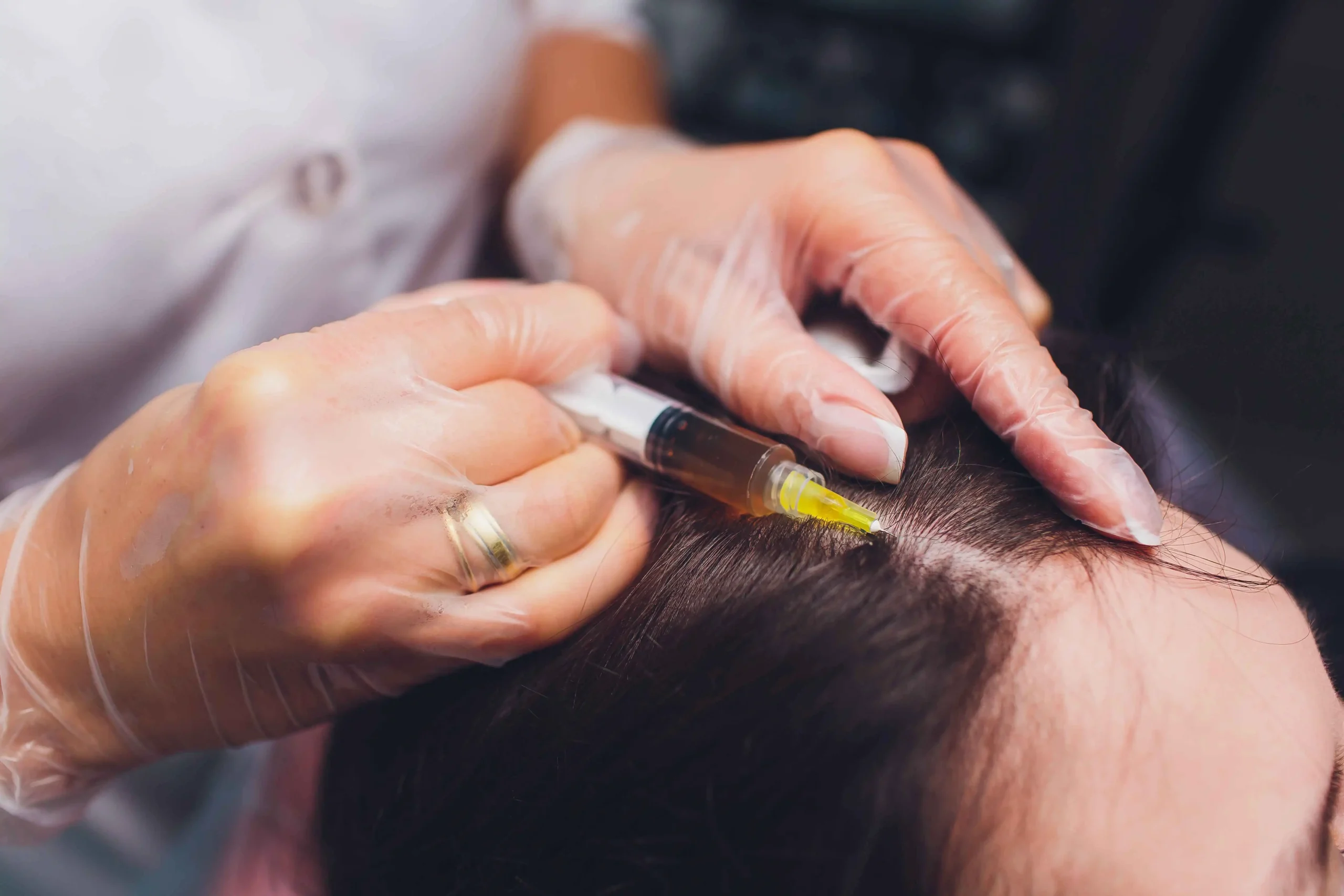
Table of Contents
If you have been researching PRP and PRF injections, you have probably noticed that most pages describe them almost identically. That is not much help when you are trying to pick one.
Both start with your own blood, and both aim to support collagen and tissue repair. The difference is how each is prepared and how quickly it releases what it carries, and that single detail makes PRP vs PRF a real decision.
Should I get PRP or PRF on my face?
Most providers lean toward PRF around the eyes, where skin stays thinnest, and toward PRP across the broader face for overall tone, texture, and pore appearance. PRF releases growth factors slowly over roughly ten to fourteen days, which suits delicate areas. Your provider decides in person after reviewing your skin and medical history. Results vary.
What PRP and PRF Actually Are
PRP and PRF injections in Crestview Hills, KY start the same way: a small blood draw and a centrifuge spin that concentrates the platelets and growth factors your body already uses to repair tissue. Then, the concentrated material is injected or applied to the treatment area.
Both are autologous, meaning everything used comes from your own body with no synthetic additives, which is a large part of the appeal for patients drawn to regenerative aesthetics.
One thing worth saying plainly: PRP is FDA-cleared for certain wound-care applications, and its use for facial rejuvenation and hair is off-label. The same is true of PRF. The research is encouraging but still developing, so careful providers talk in ranges rather than make promises.
The Core Difference Between PRP and PRF
The core difference is the speed of release. Platelet-rich plasma (PRP) is spun faster and typically prepared with an anticoagulant, producing a concentrated liquid serum that delivers growth factors in a fast, front-loaded burst.
Platelet-rich fibrin (PRF) is spun more slowly, without anticoagulants or additives. That gentler spin lets a fibrin matrix form, a soft, natural scaffold that holds platelets, white blood cells, and growth factors together. Rather than releasing everything at once, it releases them gradually over roughly 10 to 14 days.
Neither is better in the abstract. They behave differently once they are in the skin.
Why PRF Is Often Chosen for the Under-Eye Area
PRF is often chosen for under-eye work because a slow, steady release tends to suit thin skin better than a single concentrated burst. The skin under your eyes is some of the thinnest on the body and responds best to gradual change, which is why people in Northern Kentucky most often request PRF treatment for this area.
Most patients who ask about it are dealing with a mix of hollowing, crepey texture, and shadowing commonly called dark circles. Among the PRF benefits patients report, improved skin thickness and brightness come up most often, though those changes develop over weeks and vary from person to person. Volume loss, pigment, and visible vessels under thin skin can look similar in the mirror and respond differently, so a provider assesses the area in person first.
Where PRP Still Makes Sense
PRP remains a strong choice for broader treatment areas and for the scalp, where it has the longer track record. When the goal is overall tone, texture, and pore appearance across the full face, its liquid consistency spreads well and covers more ground. Among the PRP benefits worth knowing, PRP treatment in Crestview Hills pairs naturally with SkinPen® microneedling, where the serum is applied across freshly treated skin.
Newer does not automatically mean better. PRF’s structure helps in specific areas, and PRP’s longer research history is a legitimate advantage.
PRP and PRF for Hair Thinning
Both are used on the scalp to deliver growth factors near the follicle, aiming to support blood flow and encourage activity in still-viable follicles. We’ve studied PRP more extensively here, and it forms the basis of our hair restoration treatments.
Expect a slow timeline. Visible changes typically develop between four and nine months, not weeks, and maintenance sessions are usually part of the plan rather than an afterthought. Results vary with the type and stage of hair loss, and as noted above, scalp use is off-label.
How to Tell Which One Is Right for You
Start with the concern, not the treatment. Delicate, targeted areas like the under-eyes generally lean toward PRF. Broader surface rejuvenation and established scalp protocols generally lean toward PRP.
From there, a provider considers what you cannot assess from a search result: your skin thickness, what is driving the concern, your medical history, and any medications that affect platelets or clotting.
It is also not always an either-or choice. Many plans use both, in different areas or at different stages.
Common Questions About PRP and PRF
Does PRF last longer than PRP?
Often, because its release period is extended rather than immediate. How long does the effect last? It still depends on the area treated and the individual.
How many sessions are typical?
Usually a series rather than a single visit, generally administered across a four to six-week span, with the specific plan set at your consultation.
Is one more uncomfortable than the other?
Both involve a blood draw and injections, and most patients tolerate them similarly. Mild redness or swelling afterward is common and usually short-lived.
Talking Through the Right Option at Bellava Aesthetics
Our providers review the area, your concern, and your history before recommending one option over the other, because the right answer varies from patient to patient. Bellava Aesthetics offers PRP and PRF injections for under-eye rejuvenation, skin texture and tone, and hair restoration, serving patients in Crestview Hills, Union, and across Northern Kentucky.
Schedule a PRP/PRF consultation at Bellava Aesthetics to discuss which treatment fits your goals. We will walk through both options, talk honestly about what is realistic for your concern, and go from there.